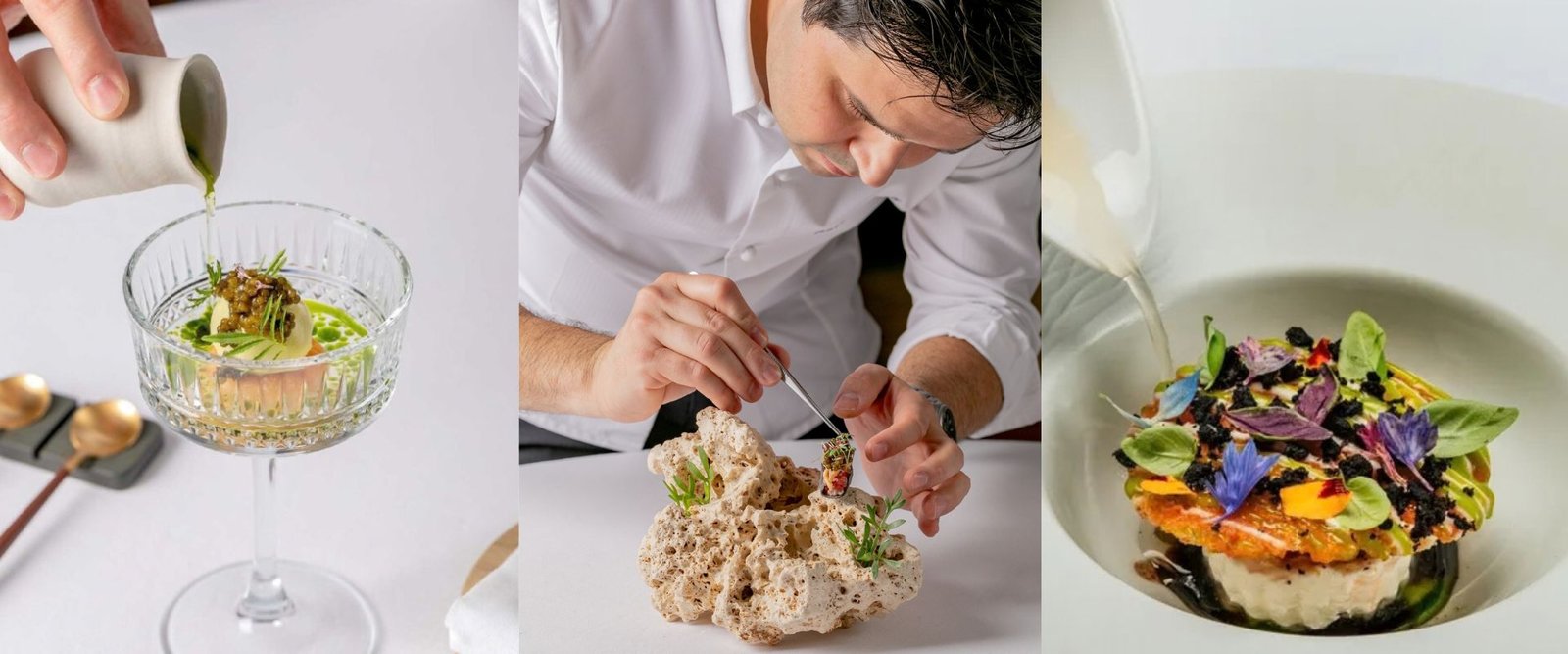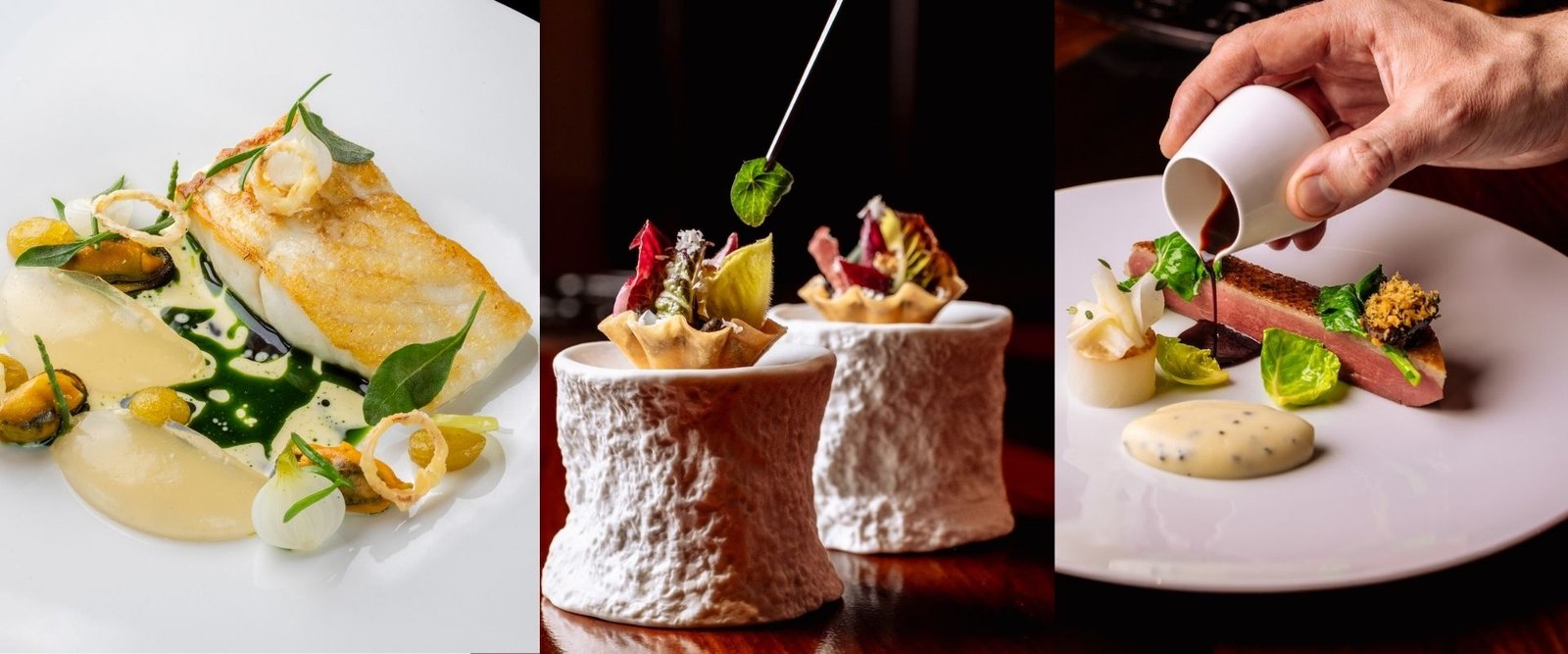


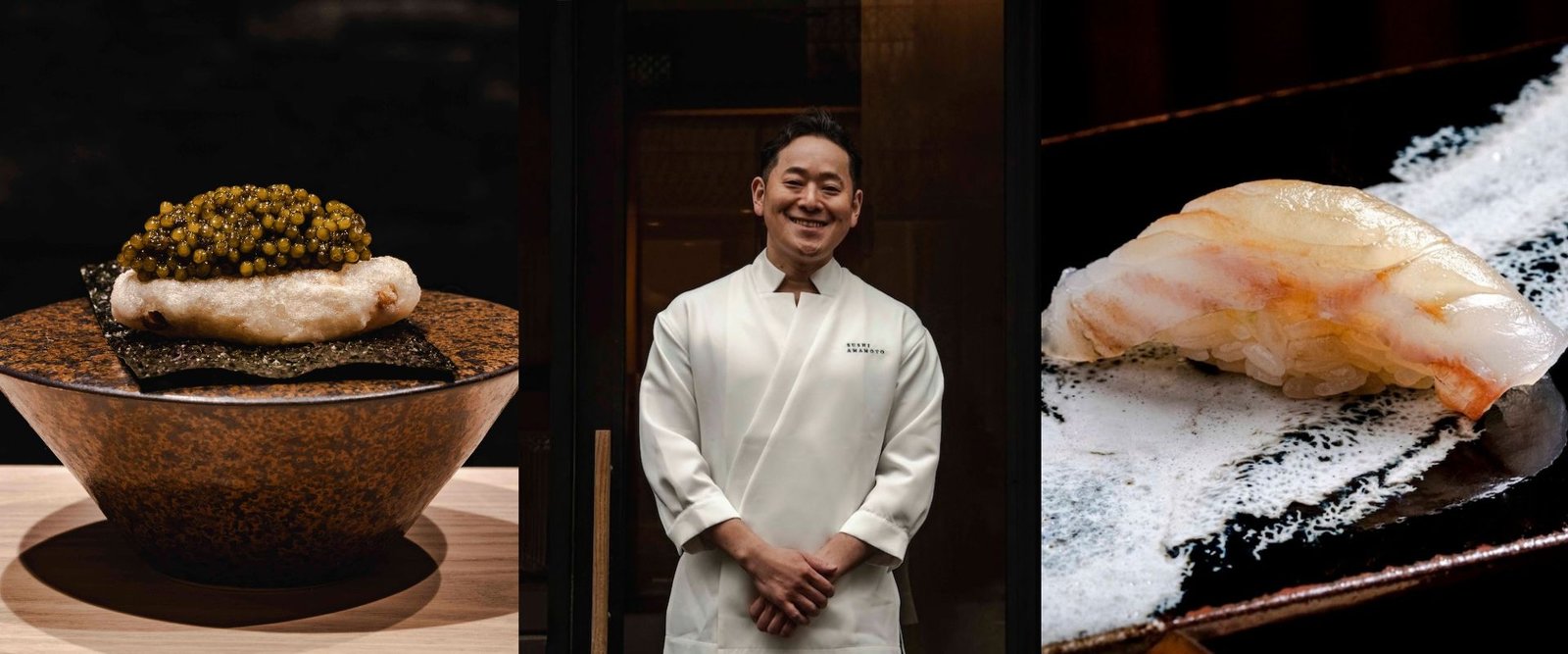
In the heart of Mayfair, on Albemarle Street, Sushi Amamoto offers an intimate interpretation of Japanese fine dining centred on precision, seasonality and trust. With just 16 seats at its counter, the restaurant creates an experience where there is little separation between the chef, the ingredients and the guest.
Led by Executive Chef Patron Shogo Amamoto, Sushi Amamoto brings to London a philosophy shaped by decades of experience in Edomae-style sushi. Following the success of his restaurant in Taipei, the London location adapts that approach to its surroundings, working with exceptional European produce while maintaining the discipline, restraint and attention to detail associated with traditional Japanese sushi.
Here, omakase is more than simply a tasting menu. Each course is determined by the chef according to the quality of the ingredients, the season and the progression of the meal. Fish, rice, temperature, knife work, presentation and timing all play an equally important role, resulting in a dining experience where even the smallest details have been carefully considered.
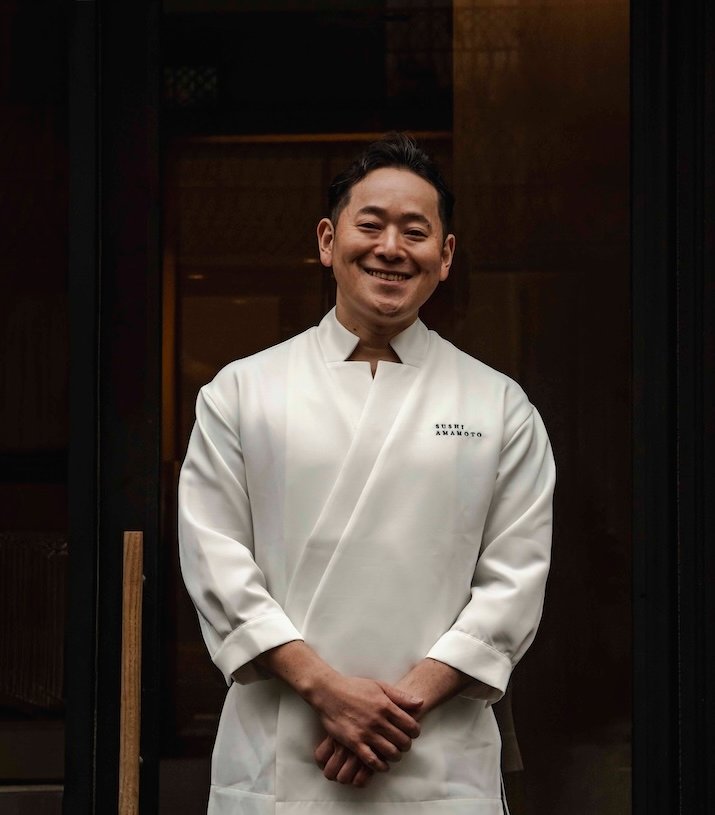
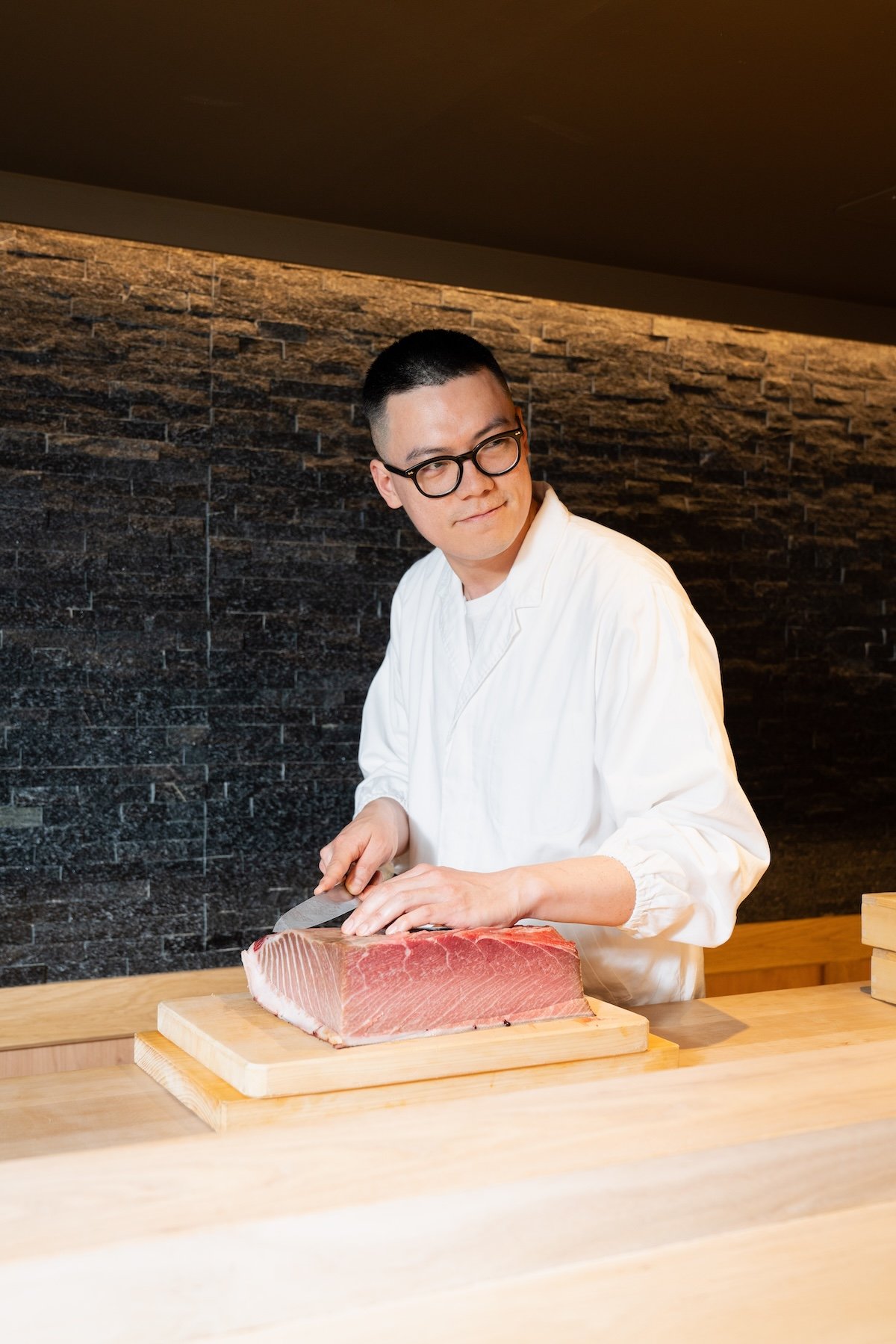
Chef Shogo Amamoto
For Chef Shogo Amamoto, sushi is the result of years of repetition, discipline and respect for tradition. Born in Fukuoka Prefecture, Japan, he began his sushi apprenticeship at just 15 years old at Kogyoku, a respected restaurant close to his home. By the age of 23, his skill had led him to Taiwan to help launch Kogyoku’s outpost there, beginning a relationship with the island that would continue for more than a decade.
In 2015, he opened the original Sushi Amamoto in Taipei’s Da’an District, with just 12 seats arranged around a cypress wood counter. The restaurant quickly became one of Asia’s most sought-after sushi destinations, with reported waiting lists extending from six months to a year. When the Michelin Guide arrived in 2019, Sushi Amamoto was awarded two Michelin stars on its first appearance in the guide, an unusual achievement for a restaurant making its debut.
The restaurant retained those two stars for three consecutive years before moving to a private members’ club format. As Michelin does not award stars to members-only establishments, the recognition was no longer applicable, although the standards and philosophy that had earned the stars remained at the heart of Amamoto’s work.
London represents the next chapter of that story. In 2026, Amamoto brought his name and omakase philosophy to Mayfair for the first time outside Taiwan, working with restaurateurs Geoff and Lucas Leong of Leong Enterprises and Head Chef Jongho Park, who trained with Amamoto in Taipei.
A Counter Where Every Detail Matters
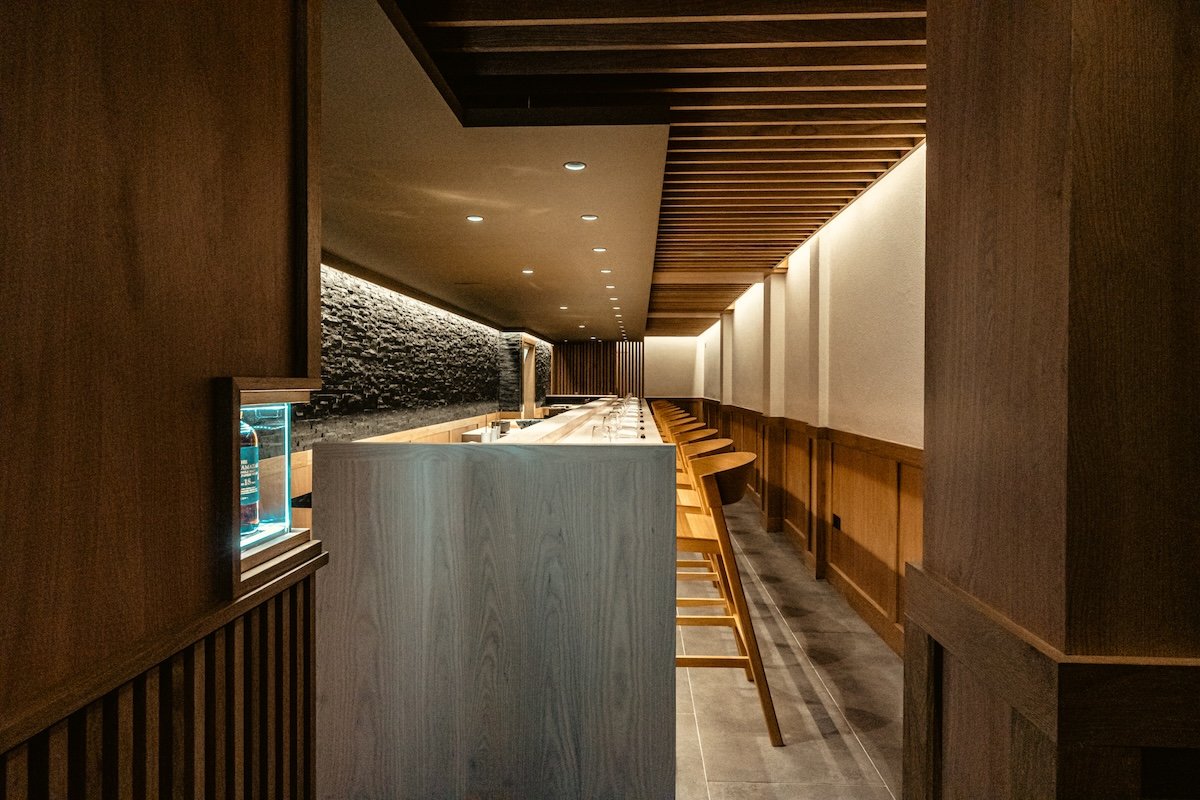
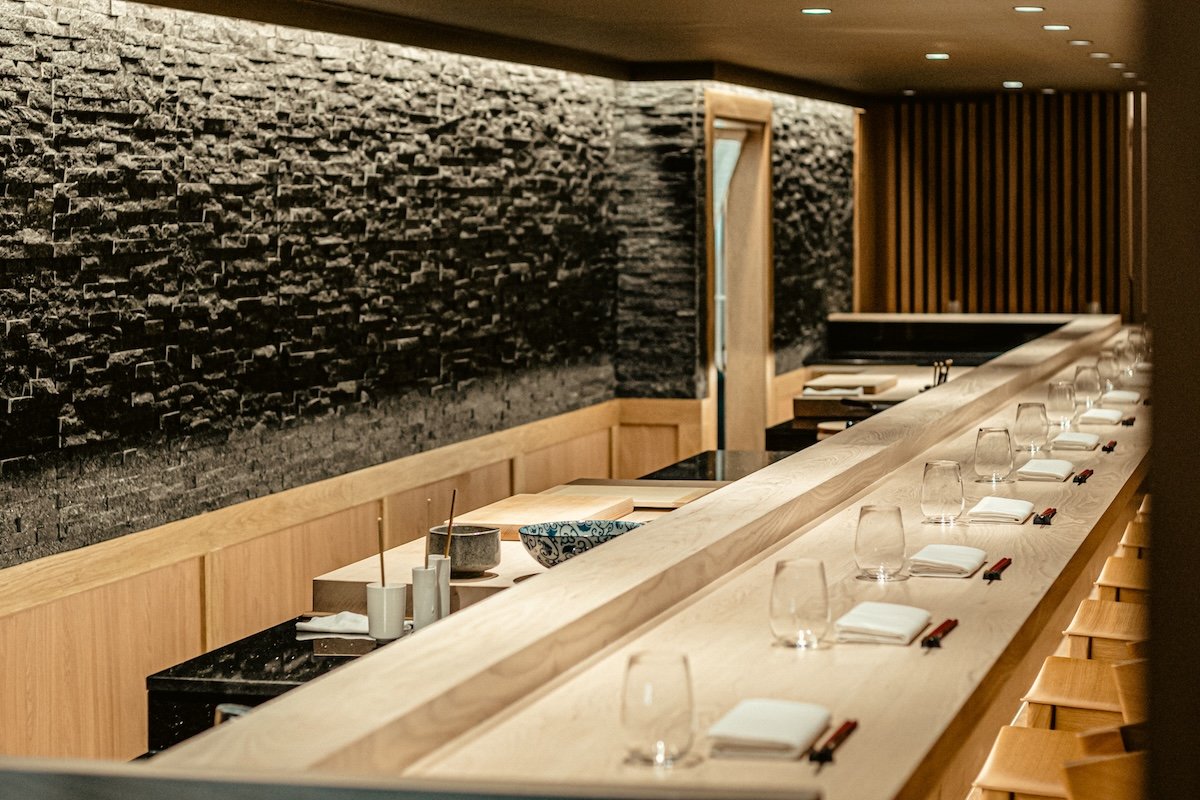
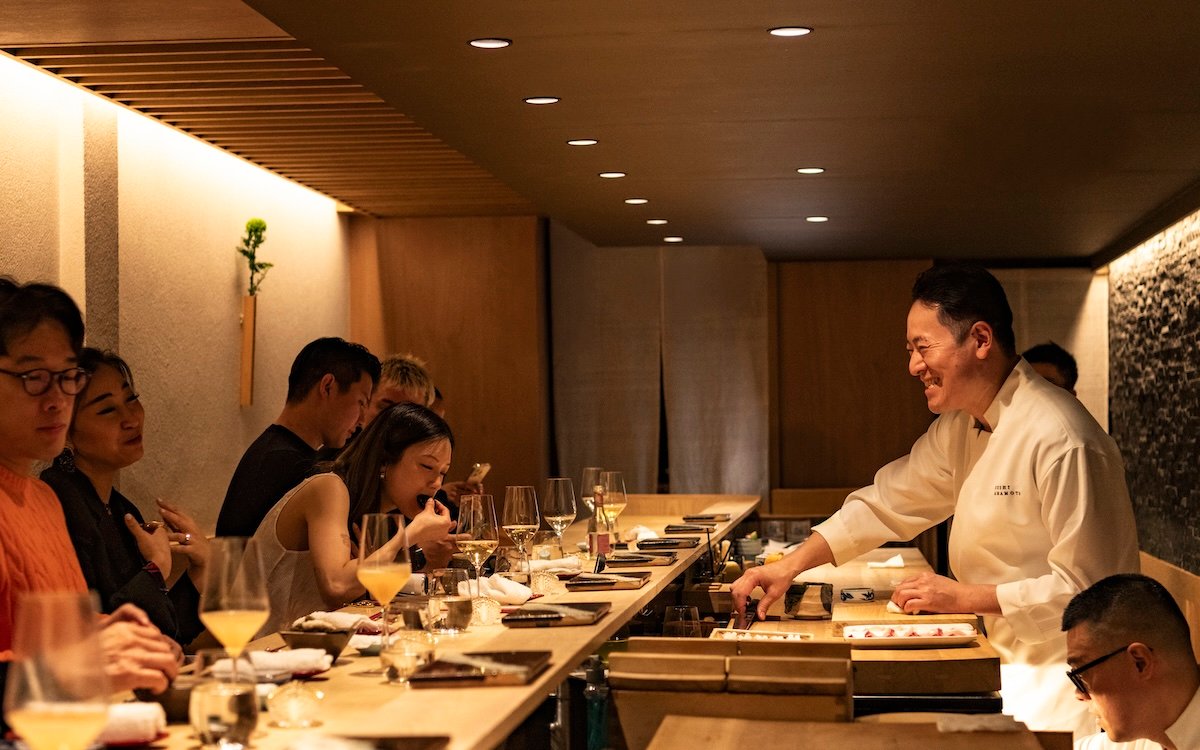
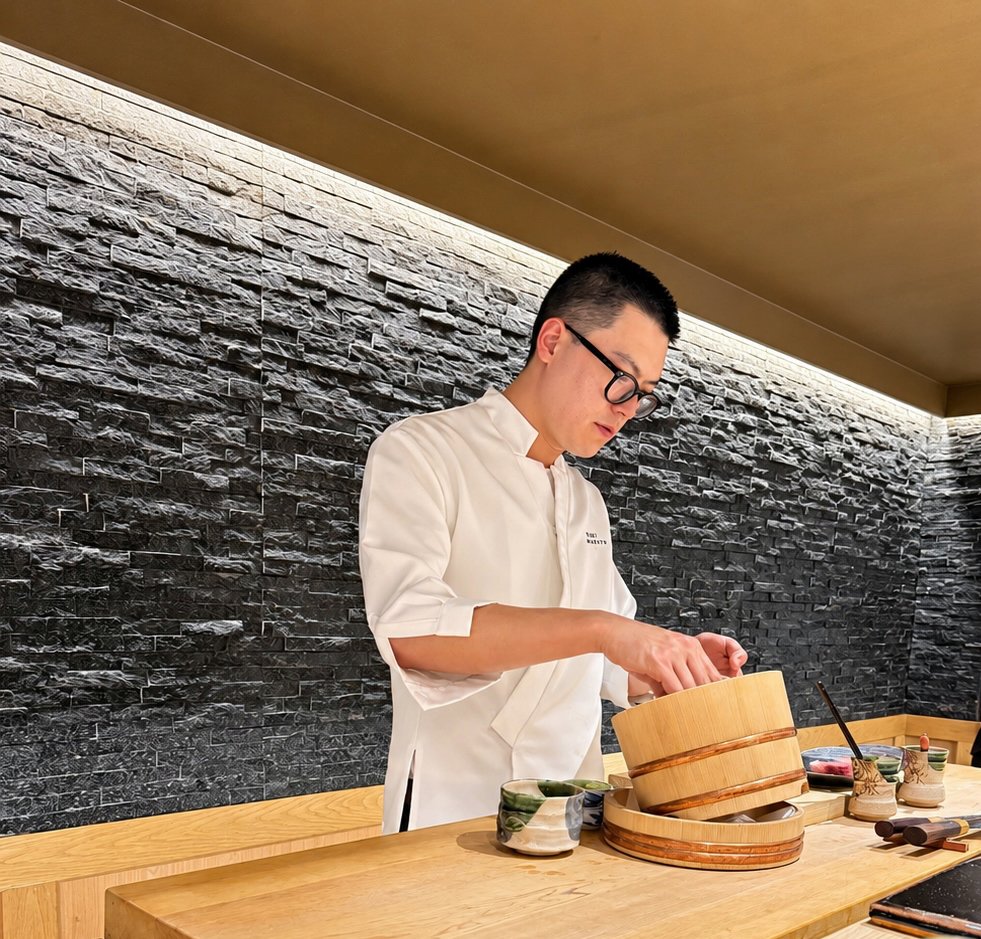
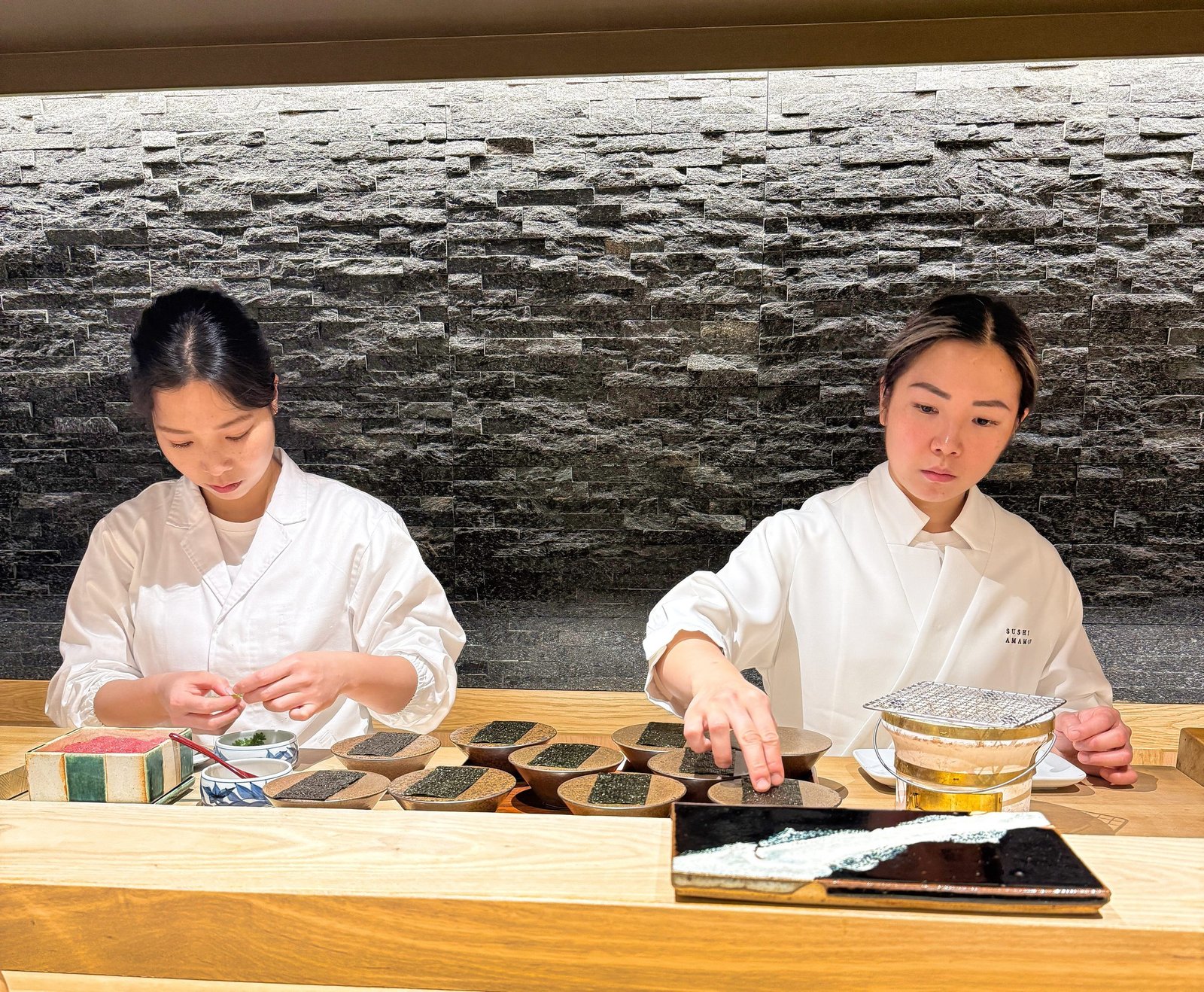
Sushi Amamoto is deliberately intimate. The restaurant has just 16 seats, all positioned around the omakase counter, creating an environment where guests are close enough to observe the preparation of each course.
The interior follows the same philosophy as the cuisine. French oak, stone and wood create a minimalist environment in which there is little unnecessary decoration competing for attention, but every detail is carefully thought out. The focus remains firmly on the counter, the chefs and the food.
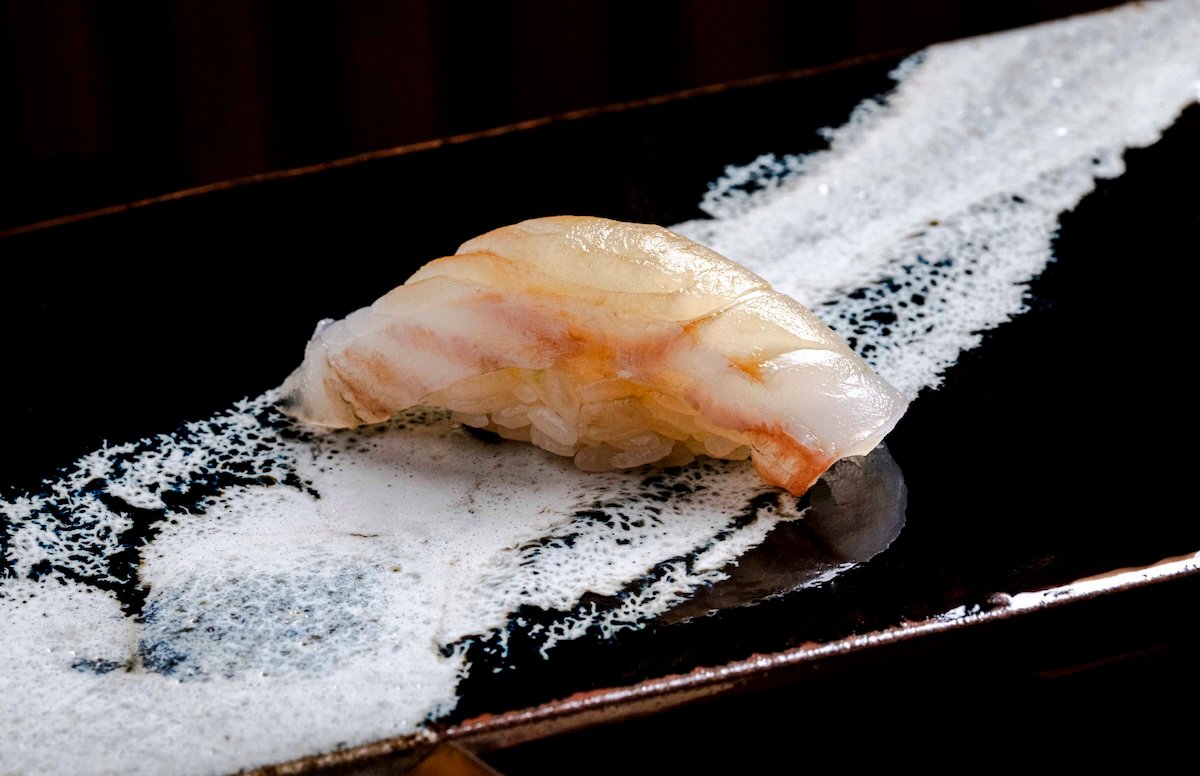
There is also a remarkable attention to tableware. Chef Amamoto has commissioned a personal collection from Utsuwa Maesaka, a specialist ceramics atelier in Japan, with plates and vessels handcrafted to complement the season in which each dish is served. Their role is not purely decorative: the texture, weight and colour of each piece are considered in relation to the food placed upon it.
It is an approach that captures the wider philosophy of the restaurant. Nothing is there simply for effect. Each element has a purpose.
The Omakase Experience at Sushi Amamoto
At its heart, omakase is an act of trust. Rather than choosing individual dishes, guests entrust the chef with the meal, allowing the selection to be determined by seasonality, availability, quality and the rhythm of the experience.
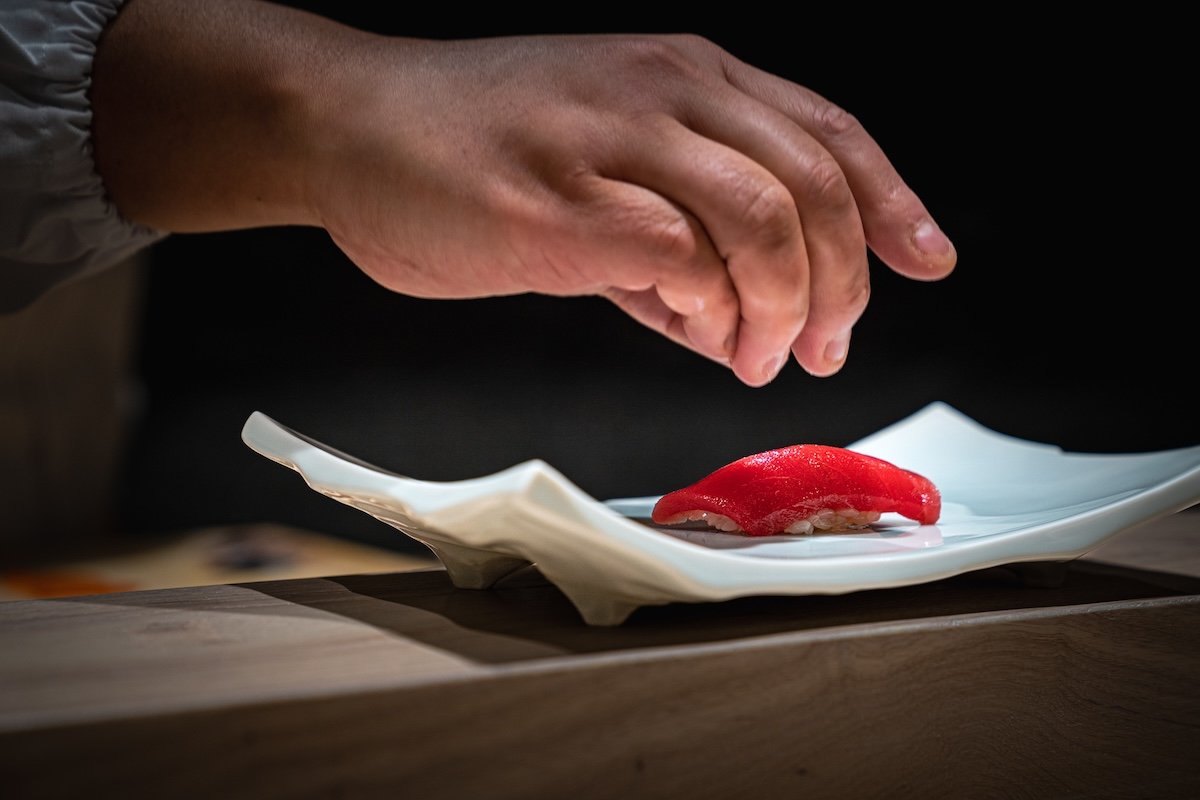
At Sushi Amamoto, this philosophy is particularly pronounced. The complete omakase developed by Chef Amamoto comprises 20 carefully composed courses, including 12 types of nigiri, with each piece considered as an individual dish rather than simply another bite in a sequence.
The progression is important. An exceptional omakase is not simply a collection of the best ingredients available that day; it is about how those ingredients work together. Courses can move from delicate to more intense flavours, with changes in temperature, texture and richness creating a sense of progression throughout the meal.
This philosophy is echoed in the restaurant’s own discussion of Michelin-level omakase: the experience is built around exceptional produce, refined craftsmanship, balance and a carefully considered progression from lighter to richer expressions.
Fish, Rice and the Importance of Seasonality
While Japanese sushi is often discussed primarily in terms of the quality of its fish, Amamoto’s approach places equal importance on everything supporting it.
In London, fish is sourced primarily from the seas around the UK and Europe, selected according to quality and seasonality. This represents an important evolution of the original Taipei concept: the Edomae technique remains intact, but the ingredients are adapted to the environment in which the London restaurant operates.
The rice is treated with the same level of consideration. It is prepared using soft water, allowing acidity to extend more smoothly and giving the rice a refined finish. It is a small detail that demonstrates the philosophy behind the restaurant: the foundation of great sushi is not simply the fish placed on top, but every component that makes up the bite.
This is where the discipline of Edomae sushi becomes particularly apparent. Preparation is not about disguising the ingredient with sauces or unnecessary decoration. Instead, the techniques are used to reveal and enhance its natural character.
The Signatures: Trout Oshizushi
Among the dishes that demonstrate this philosophy particularly well is the trout oshizushi, a reinterpretation of a traditional style of sushi associated with Osaka and the Kansai region.
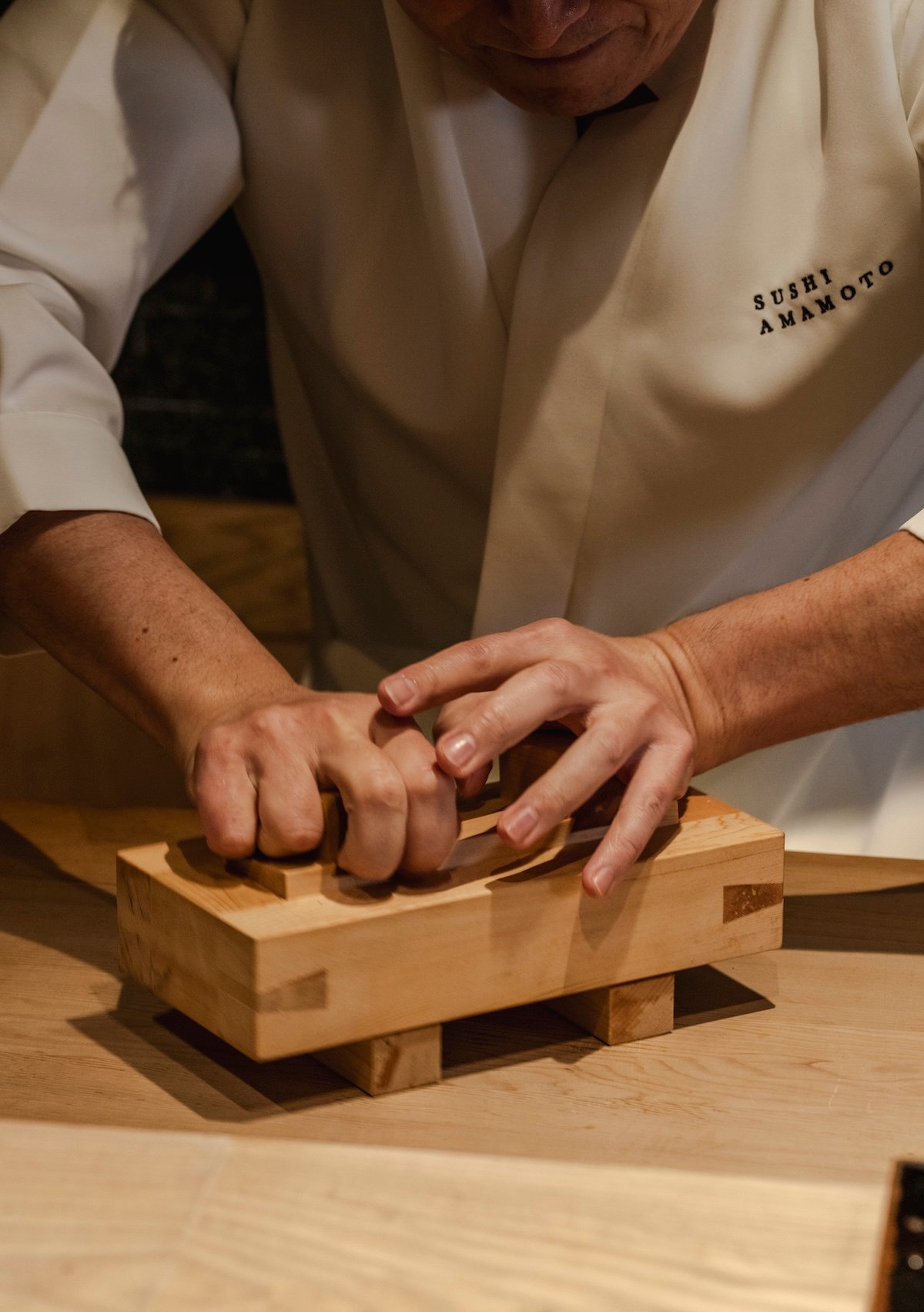
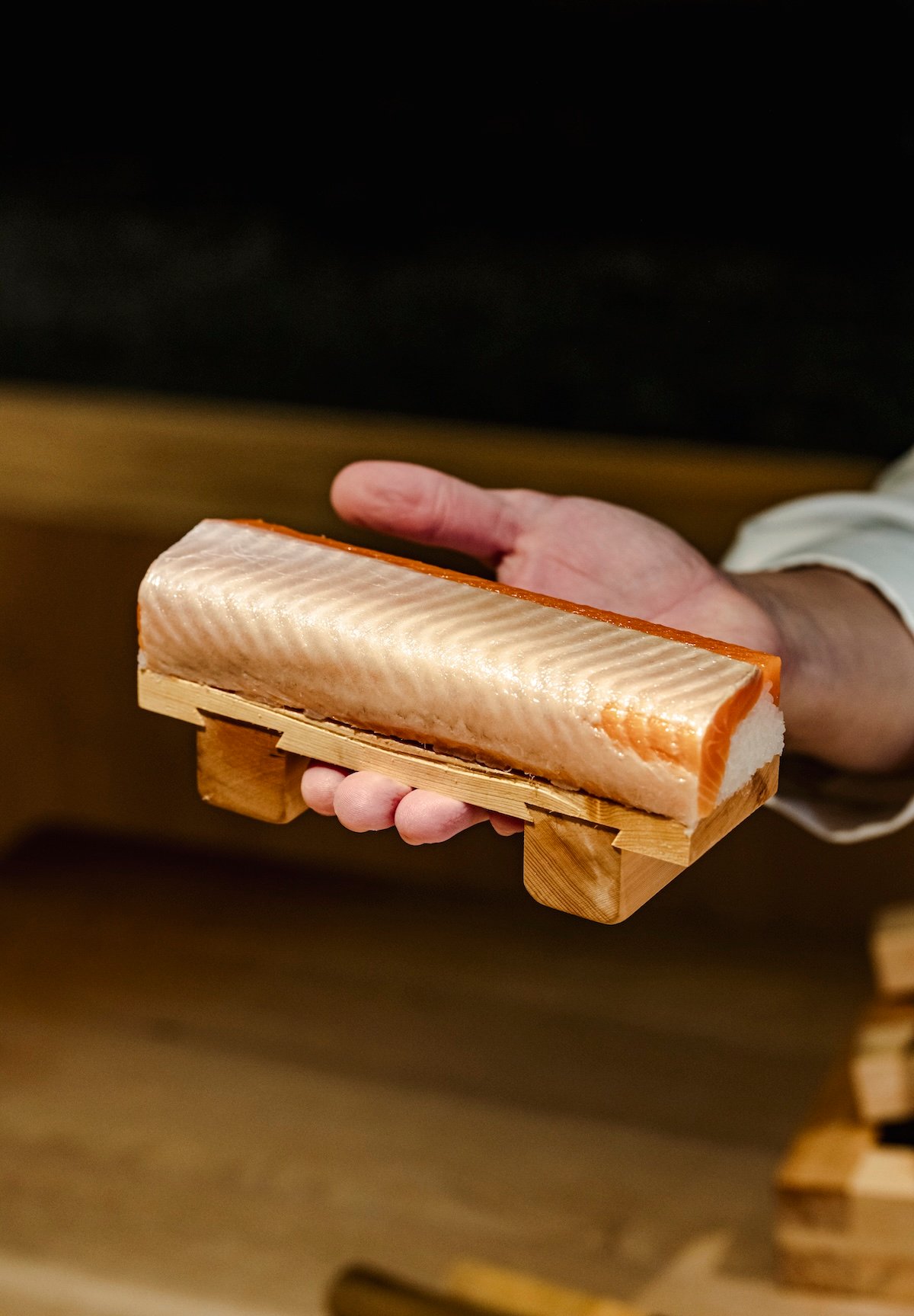
Oshizushi predates the hand-formed nigiri that is now more widely recognised around the world. Traditionally, fish and rice are pressed into a wooden mould known as an oshibako, creating a compact rectangular piece that is then sliced.
At Sushi Amamoto, Chef Amamoto replaces the more traditional mackerel with Hampshire trout, layering it over firmly pressed shari and wrapping the preparation in kombu. The choice of trout is deliberate: its clean, mild richness works particularly well with the pressed rice and kombu.
It is a particularly interesting example of how Amamoto adapts Japanese tradition to its new environment. The technique remains rooted in Japanese culinary history, while the principal ingredient comes from Britain.
The Precision Behind Every Piece
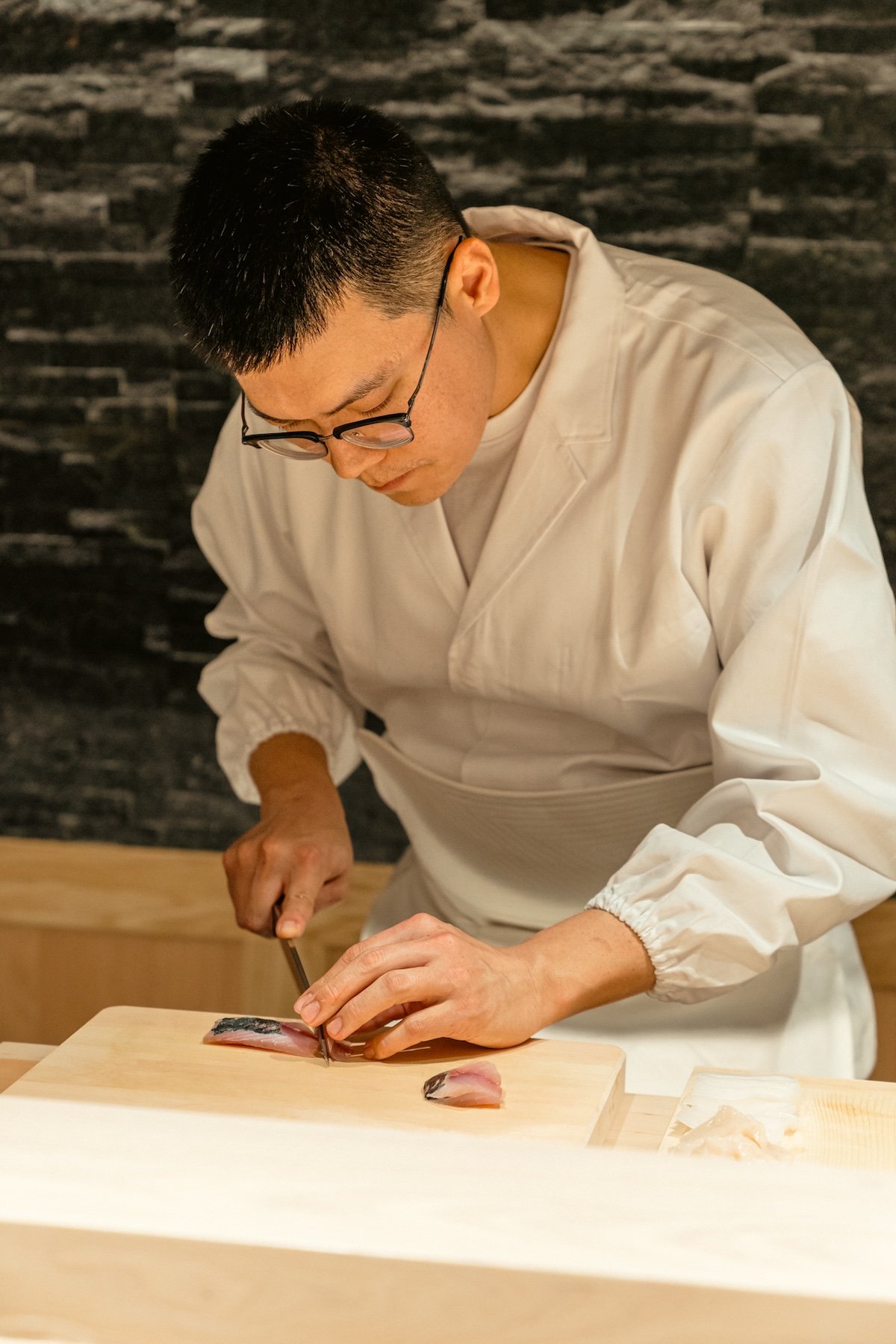
At Sushi Amamoto, precision is not about theatrical knife skills performed for their own sake. It is about understanding how technique changes the final experience of an ingredient.
The restaurant’s chefs spend years refining traditional Japanese knife work, with different knives used according to the ingredient and desired result. A yanagiba is used for precise sashimi cuts, a deba for filleting and butchering fish, and an usuba for delicate vegetable preparation and garnishes.
Even the direction and angle of the cut can affect the texture of the fish, how the flavours are released and how sauces or nikiri adhere to the surface.
This is especially evident at the counter, where diners can watch the preparation at close range. There is a quiet rhythm to the process: the knife, the rice, the fish and the final placement on the plate. It feels less like a performance designed to entertain and more like the visible result of years of repetition and discipline.
The Wine and Sake Selection
The drinks programme follows the same level of precision as the food. Curated by Head Sommelier Bowie Tsang, the selection includes sake pairings designed to complement the rhythm of the omakase without overwhelming it.
For wine lovers, the collection is particularly noteworthy. The programme features an exceptional selection of Burgundy, including rare allocations from producers such as Domaine Coche-Dury, Domaine Raveneau, Domaine de la Romanée-Conti and Domaine Prieuré Roch.
Champagne also has a strong presence, with several editions of Krug Grande Cuvée alongside grower Champagnes from producers including Jérôme Prévost, Guillaume Selosse and Cédric Bouchard. For those looking beyond sake and Champagne, the selection includes Rieslings from producers such as Egon Müller and Trimbach, while mature Bordeaux and Burgundy offer more substantial options for special occasions.
Wine pairings are designed to follow the progression of the omakase, beginning with lighter and more delicate wines before moving towards richer and more structured expressions.
Conclusion
Sushi Amamoto is an experience built around precision, restraint and trust. From the moment guests take their seats at the 16-seat counter, there is a clear sense that every element has been considered, from the design of the restaurant, the sourcing of the fish and preparation of the rice to the knife work, tableware, wine and timing of each course.
The restaurant also offers an unusual opportunity to experience the philosophy of a chef whose original Taipei restaurant earned two Michelin stars and became one of Asia’s most sought-after sushi destinations. Bringing that approach to London does not mean reproducing the past; instead, Amamoto has adapted the Edomae tradition to the ingredients and seasonality of Europe while maintaining the standards that define his work.
For Hype, Sushi Amamoto represents a distinctly contemporary interpretation of Japanese luxury dining: intimate, highly technical and deeply rooted in tradition, yet shaped by its new London setting. The experience derives its impact from the quality of the ingredients, the precision of the chefs and the gradual progression of the omakase.
For more exclusive dining destinations and unforgettable culinary experiences, explore our Hype Gourmet section dedicated to the world of fine dining.